
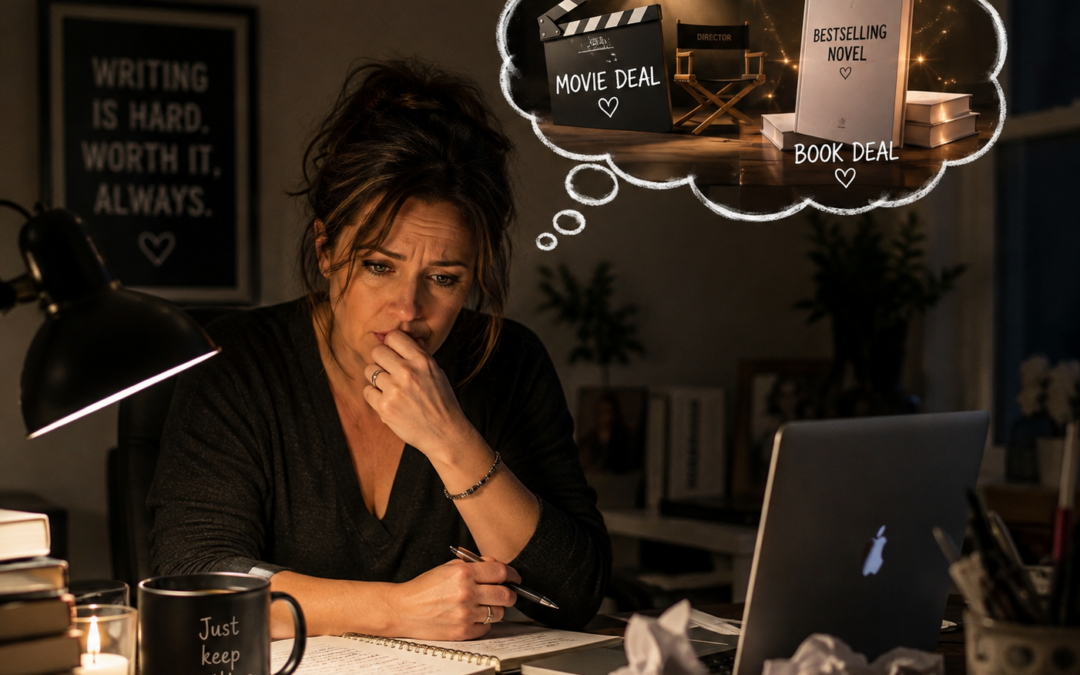
Well…it’s been one heck of a week.
The biggest news is that Drive City is officially out on submission through my literary agent.
That sentence doesn’t even seem real to me.
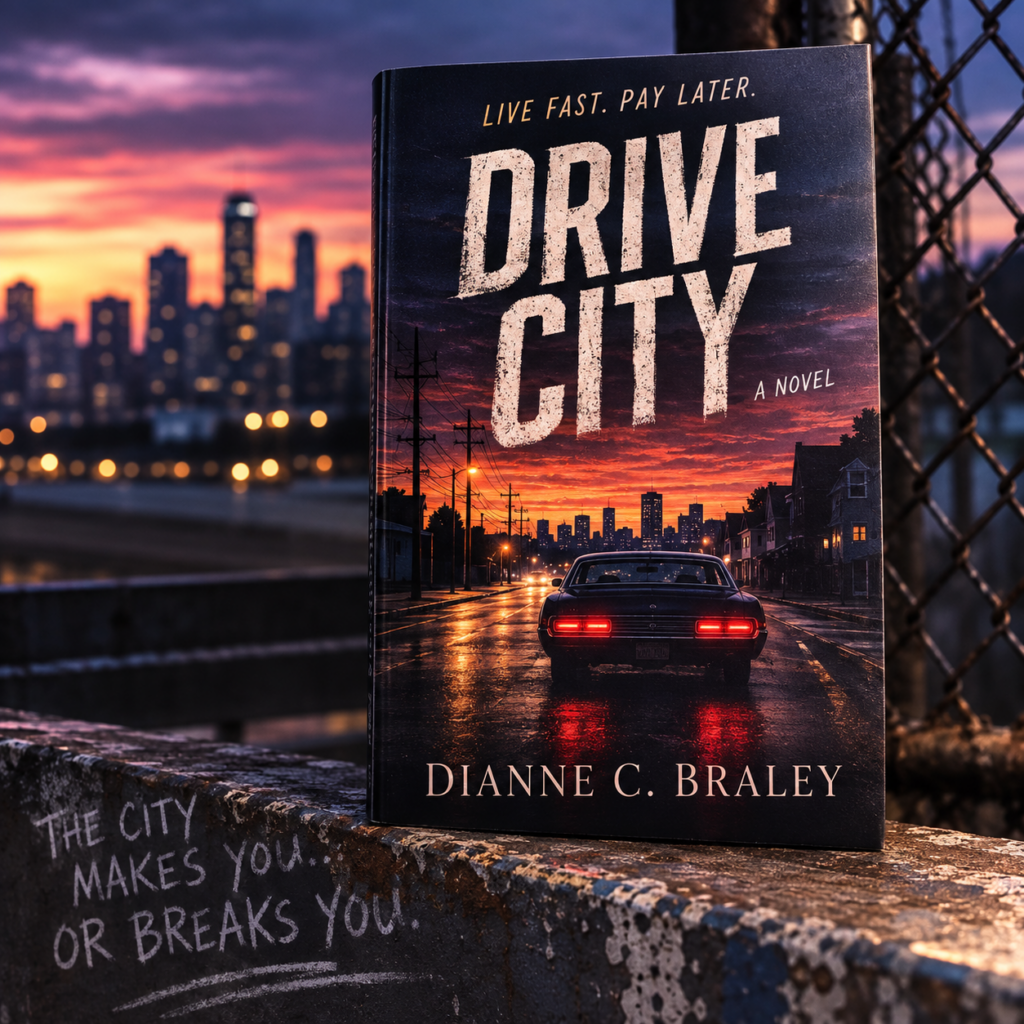
After years of writing, rewriting, deleting, rewriting again, and wondering if anyone would ever read this story, it’s now sitting on editors’ desks. There’s nothing left for me to do but wait, which, if you know me, is probably the hardest part of the whole process. So…fingers crossed.
As if that wasn’t enough, I also got some exciting news about The Silence in the Sound. The production company representing the film rights has officially submitted it for adaptation, and feedback is starting to come in. One company is reportedly considering acquiring it as a six-part television series.
I’m trying not to get ahead of myself because I know how this business works, but wow…what an incredible thing to even be able to say.
Pray for me. Send good vibes. Cross your fingers. I’ll take all of it.
While all of that is happening, The Girl on the Billboard has taken on a life of its own.
For those who haven’t been following along, The Girl on the Billboard is the narrative nonfiction book I’m writing about the unsolved 1992 murder of Susan “Su” Taraskiewicz, a young woman from Saugus whose face looked down on everyone entering my hometown of Revere from a billboard for nearly a decade after she was killed. I never knew Su, but like so many people who grew up there, I never forgot her.
While all of that is happening, The Girl on the Billboard has taken on a life of its own.
For those who haven’t been following along, The Girl on the Billboard is the narrative nonfiction book I’m writing about the unsolved 1992 murder of Susan “Su” Taraskiewicz, a young woman from Saugus whose face looked down on everyone entering my hometown of Revere from a billboard for nearly a decade after she was killed. I never knew Su, but like so many people who grew up there, I never forgot her.
As part of that project, we’re organizing a public vigil on September 12 at Constitution Beach in East Boston, the anniversary of Su’s disappearance. Her family will be there, along with retired investigators who worked the case, members of the community, media, and anyone who believes that after almost 34 years, Su still deserves justice.
The closer we get, the more emotional it becomes.
This isn’t just about writing a book anymore. It’s about a family that has waited more than three decades for answers. It’s about a community that has never forgotten. And it’s about making sure Su isn’t forgotten either.
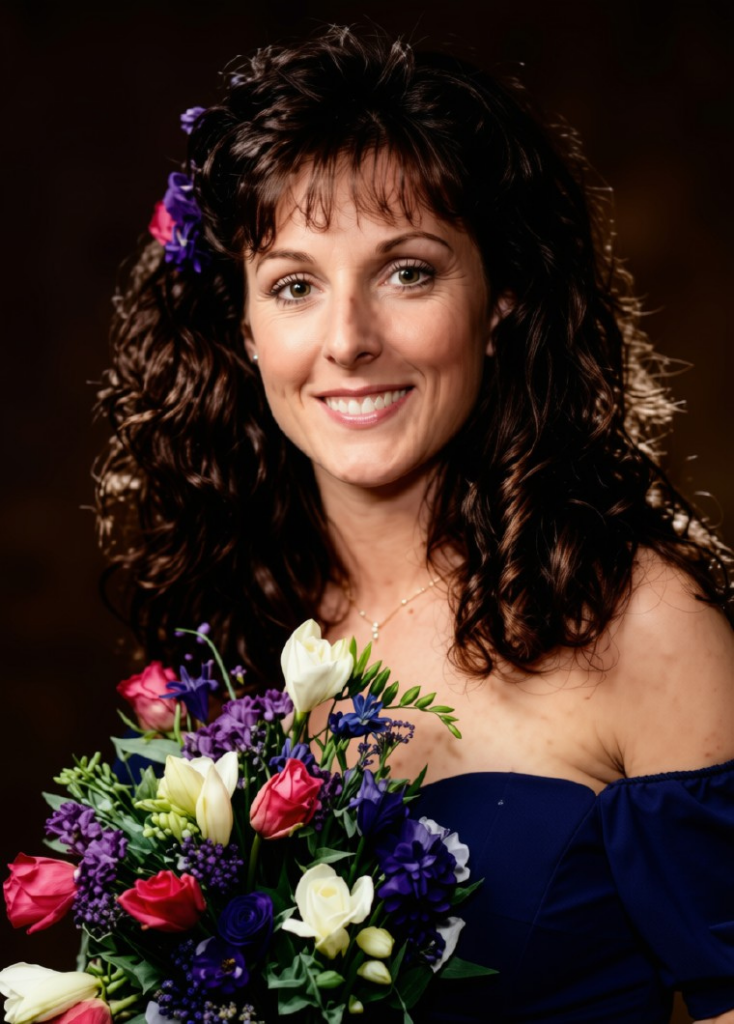
I also got some encouraging news this week. Delta confirmed that the reward in Su’s case is still active, and there’s a chance Clear Channel may donate another billboard.
I can’t even tell you what that would mean.
If you grew up in Revere during the ’90s, you remember that billboard. I know I do. Every time I drove into the city, there she was. Flowers in her hands. Looking down at everyone who passed by. It became part of Revere. You couldn’t see it without wondering who killed her and why no one had ever been held accountable.
To think another billboard could go up almost 34 years later…I don’t know. It just feels like people still care. And that matters.
Now here’s the hard part…
People keep asking me to do interviews. TV. Public speaking. Media.
I hate every second of it.
Seriously.
I’d rather sit alone and write 100,000 words than stand in front of a television camera for five minutes.
The vigil is important. I’ll do whatever I need to do because Su deserves that. But if you see me there looking like I’m about to pass out, just know I’m probably wishing I could crawl behind the podium.
People assume because I’m an author I’m comfortable speaking in public.
Absolutely not.
Give me a keyboard and leave me alone. That’s my happy place.
Speaking of writing…
Can we talk about this whole Jerry Falade situation? You can read more about it HERE.
As a writer, it honestly scared me.
Watching a huge publishing deal fall apart over suspicions of AI use has had a lot of authors asking the same question.
What exactly are the rules now?
Because AI is everywhere.
Grammarly uses AI.
Google is using AI.
If I’m trying to remember what kind of car someone drove in 1998, check the spelling of a designer’s name, look up a street in Boston, or figure out whether something actually existed in a certain year, chances are AI is involved somewhere in that search.
That’s research.
Writers have always researched.
I also use AI for social media, graphics, and advertising because, let’s be honest, being an author today is a full-time marketing job on top of writing books. If AI helps me write a Facebook ad or organize my thoughts for a post, great.
That isn’t writing my books.
My books come from my own experiences, the people I’ve met, the places I’ve lived, and the stories that won’t leave me alone until I write them.
But here’s what really got me.
I took part of my second novel, a book I wrote before AI was a thing, and ran it through one of those AI detectors.
It came back saying it was something like 70% AI.
How?
The book didn’t even have AI.
That’s when I realized I’d started doing something really stupid.
I was reading my own writing and wondering if it looked too much like AI.
Think about that.
Instead of asking, “Is this the best sentence?” I was asking, “Will a computer think I wrote this?”
That’s crazy.
So I stopped.
I’m done worrying about it.
I’m not changing my voice because an AI detector doesn’t understand it.
One of the things I’ve seen people say is that short sentences can be a sign of AI.
Well…that’s funny.
The narrator of Drive City is an uneducated kid from the city who believes he’s nobody. Of course he talks in short sentences. That’s who he is. It wasn’t a stylistic accident. It was a creative choice.
If an AI detector can’t tell the difference between intentional character voice and machine writing, maybe the detector isn’t as smart as everyone thinks.
At the end of the day, I think we’re all trying to figure this out.
AI isn’t going away.
Neither are writers.
I think there’s a huge difference between using AI as a research tool or to help market your work and asking it to write your novel for you.
At least there should be.
I’d love to know what other writers think.
Are you worried about all of this too, or am I overthinking it?
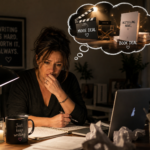
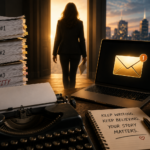
On that note I am going to generate my AI image for this blogpost because that is also where it’s helpful!




Go Dianne!! Exciting news all around. Good for you. You earned it. On AI, I believe it has no place in the creative writing process. Unavoidable for research, as you say, but even then I’m wary of the hallucinations. You’re so right that there should be guardrails. Until then, it’s on us to draw the boundaries.
WOW Dianne!!!